
Shame Says Hide. Grace Says Come.
- By candidasullivan
- October 6, 2026
- No Comments
Do you live with shame?
On an ordinary Monday, God stopped by. He sat with me as I journaled and opened up things I had never considered or understood before. Then, He opened the Scriptures to me about things I had journaled and gave me powerful answers that changed my thoughts. The whole experience was beautiful.
As I sat there with tears dripping from my eyes, thankfulness bubbled from my heart. Sometimes, it’s not our circumstances that cause us so much pain, but rather the shame the enemy attaches to us. With understanding, God set me free.
He showed me the difference between condemnation and conviction. The truth sank in and reached the places inside me that held onto shame. God’s word is healing.
Romans 8:1 KJV
8 There is therefore now no condemnation to them which are in Christ Jesus, who walk not after the flesh, but after the Spirit.
The enemy accuses. He takes our failures and uses them to tell us we are hopeless, worthless, and beyond God’s grace. But Romans 8:1 tells me that if I am in Christ, condemnation is not where I live anymore. It is shame that tells us we are bad, hopeless, and it drives us away from God with a guilt that is crippling. If I live in the shame and guilt, I don’t feel worthy of God’s blessings or His goodness. And if I don’t feel worthy, I don’t pray, write, spend time with God, or live fully.
I hide in my shame. I let it become a loud, powerful voice in my life. In some ways, it paralyzes me.
Shame says:
Don’t pray. You’ve messed up.
Don’t open your Bible. You’ve failed.
Don’t write. Who are you to encourage anybody?
Don’t expect God to use you after what you’ve done.
And suddenly shame has accomplished something dangerous:
It has made you hide from the One who can heal you.
But conviction is another story. It is the Holy Spirit. While it reveals our mistakes and sins, it does so specifically, with hope that guides us toward repentance, healing, and peace.
Condemnation says: You’ll never change.
Conviction says: This needs to change, and I will help you.
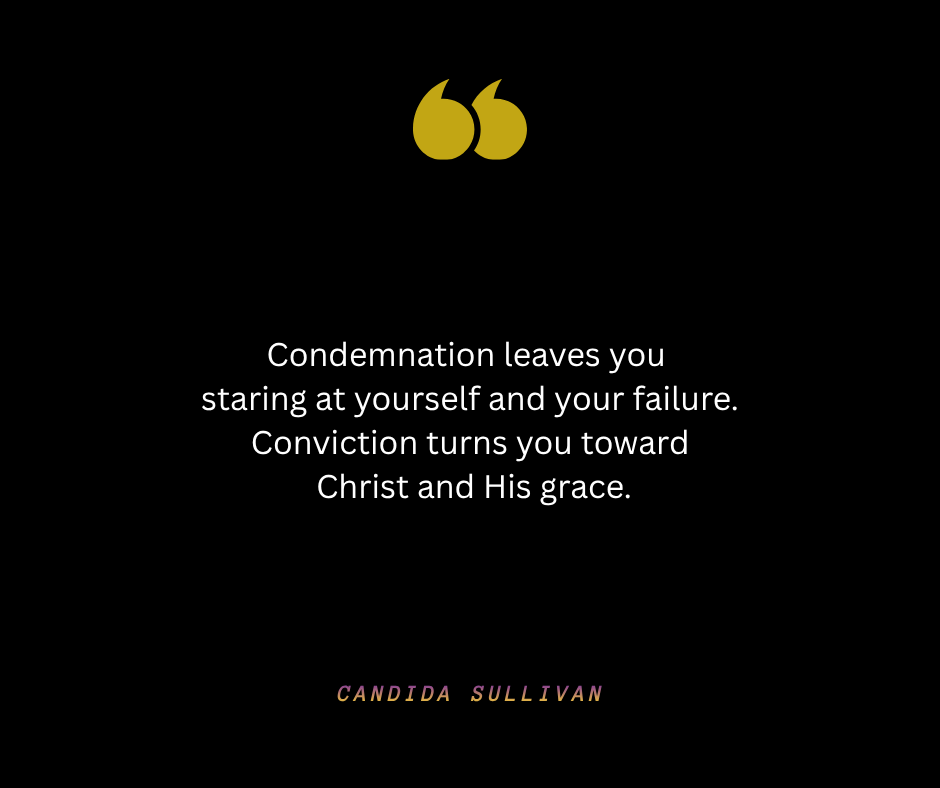
Condemnation leaves you staring at yourself and your failure.
Conviction turns you toward Christ and His grace.
After getting this explanation, I realized I have experienced both in my life. Condemnation weighs me down heavily with shame, while conviction makes me want to do better.
This helped me understand how destructive the enemy’s accusations can become when I repeatedly agree with them. Every time we feel condemned and embrace it, the feelings of unworthiness become stronger. To break free, I have to stop agreeing with the lies of condemnation and replace them with God’s truth.
If the truth leads us to conviction, then we can repent. We can learn and grow from the experience. Often, God has shown me something I was doing wrong, and I didn’t realize it until He revealed it to me (that’s conviction). That’s where the learning comes in.
We don’t know what we don’t know. But the enemy will build a shame story out of our mistakes and weigh us down with it.
Therefore, when we feel shame and guilt that drive us towards hopelessness and try to drive us away from God, we need to run to God. When we honestly give Him our thoughts and feelings, God can help us understand and see where we are.
So when shame tells me to hide, I want to recognize its voice. If I’ve sinned, I can repent. If I’ve hurt someone, I can make it right where possible. If God reveals something that needs to change, I can obey Him.
But I don’t have to punish myself indefinitely for something Jesus has already forgiven.
I don’t have to live underneath the identity of my worst moments.
And I certainly don’t have to run away from God when I need Him most.
Condemnation says: Hide from God.
Conviction says: Come closer to God.
Sweet friend, I want to pay attention to these differences and learn from them.
One keeps you chained to what you’ve done. The other leads you toward the One who can change you.
Leave a Reply